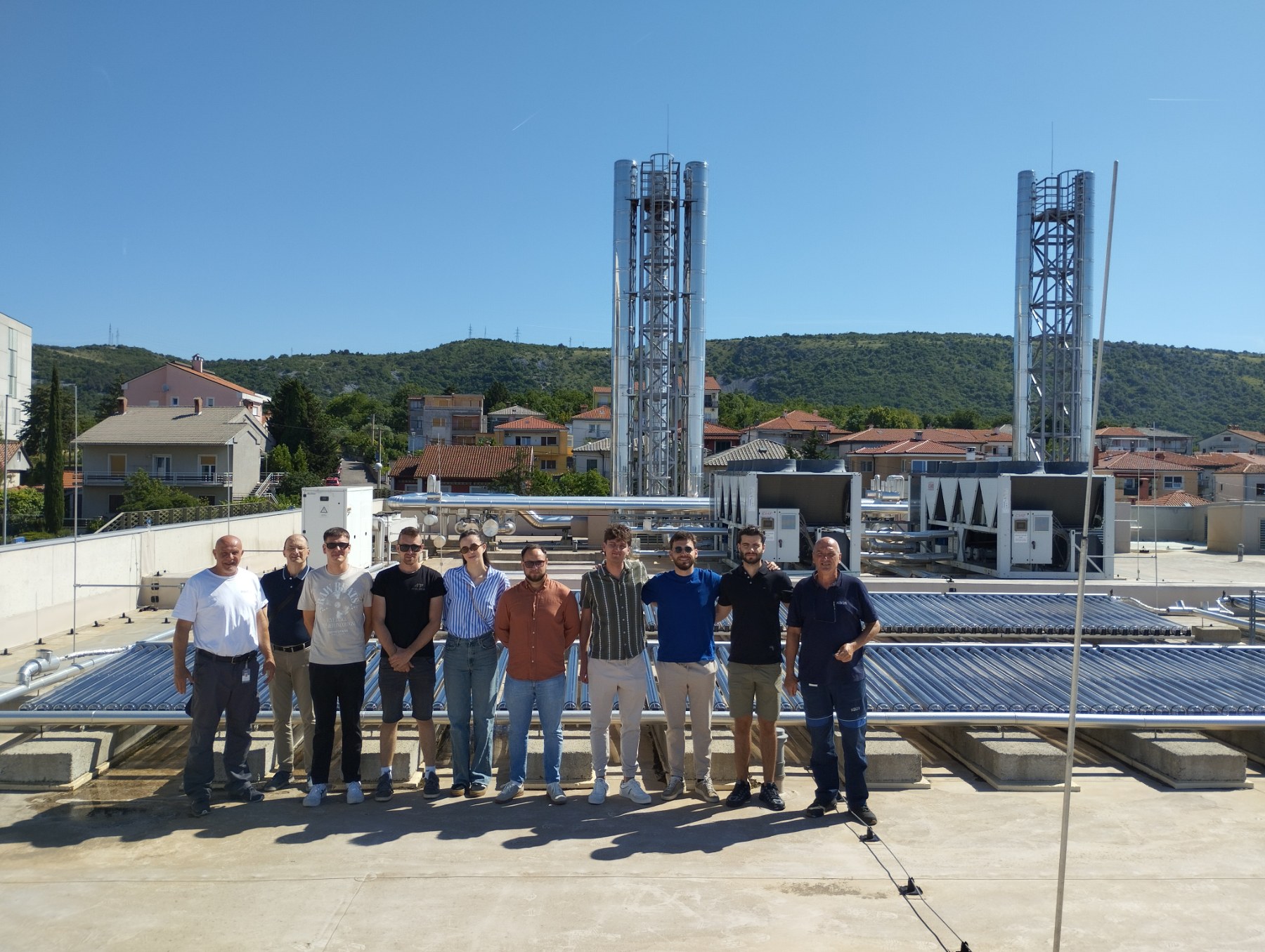
The first stop was the gas boiler room at the newly built Mother and Child Care Unit. There, students learned firsthand about the operation of the hot-water boilers that heat the hospital spaces, as well as the system that generates process steam for the laundry, kitchen, and medical sterilization equipment. These boilers also work in tandem with solar vacuum tube collectors on the roof to supplement the hospital’s domestic hot water system. Next, the students visited the fire protection facility, which relies on pressurized water and automatic sprinklers. They learned how these sprinkler heads are heat-activated: when temperatures spike, the liquid-filled glass bulb inside the nozzle bursts, instantly releasing and dispersing pressurized water over the area.
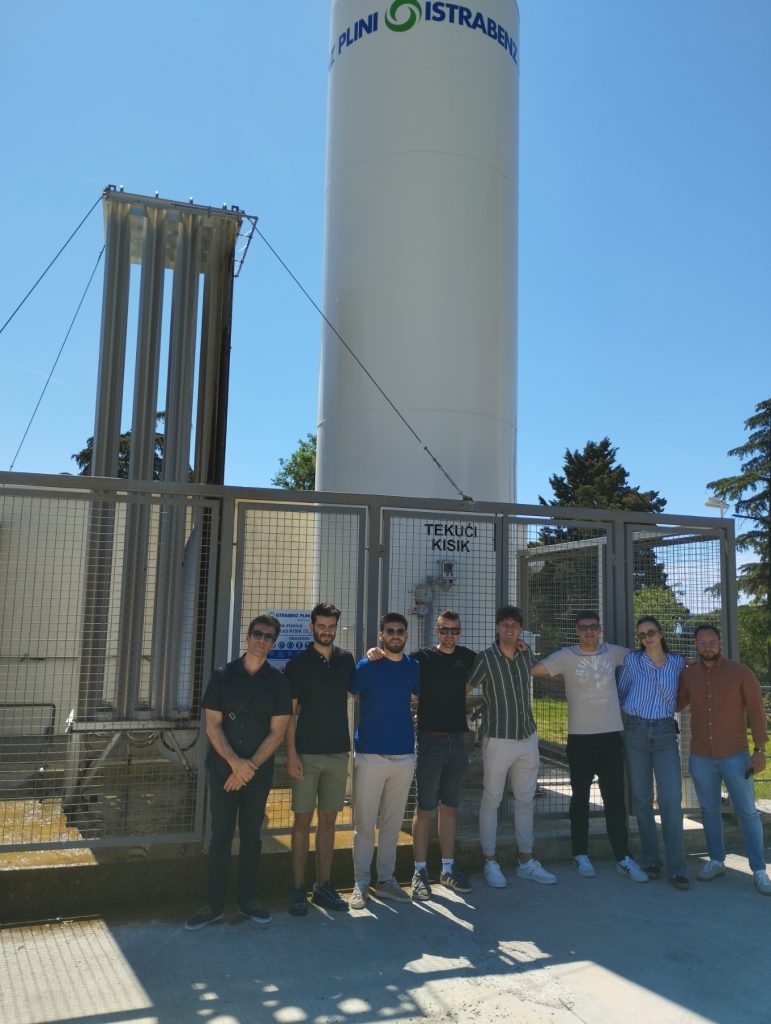
The third stop brought the group to the cooling station, where an air handling unit (AHU) manages ventilation and air conditioning by ensuring a steady supply of fresh air throughout the hospital premises. This AHU is fully equipped with heaters, chillers, humidifiers, filters, fans, waste heat recovery units (recuperators), and advanced control and measurement instrumentation. Its overall cooling capacity is supplied by three air-to-water heat pumps installed on the roof. The fourth and final stop was the Department of Underwater and Hyperbaric Medicine, where hyperbaric oxygen therapy is utilized to treat and alleviate the symptoms of various chronic illnesses.
We extend our sincere thanks to the technical services managers and staff at the Clinical Hospital Centre Rijeka for their hospitality and expert guidance. Their detailed explanations provided our students with real-world insights into the operation of complex hospital infrastructure.