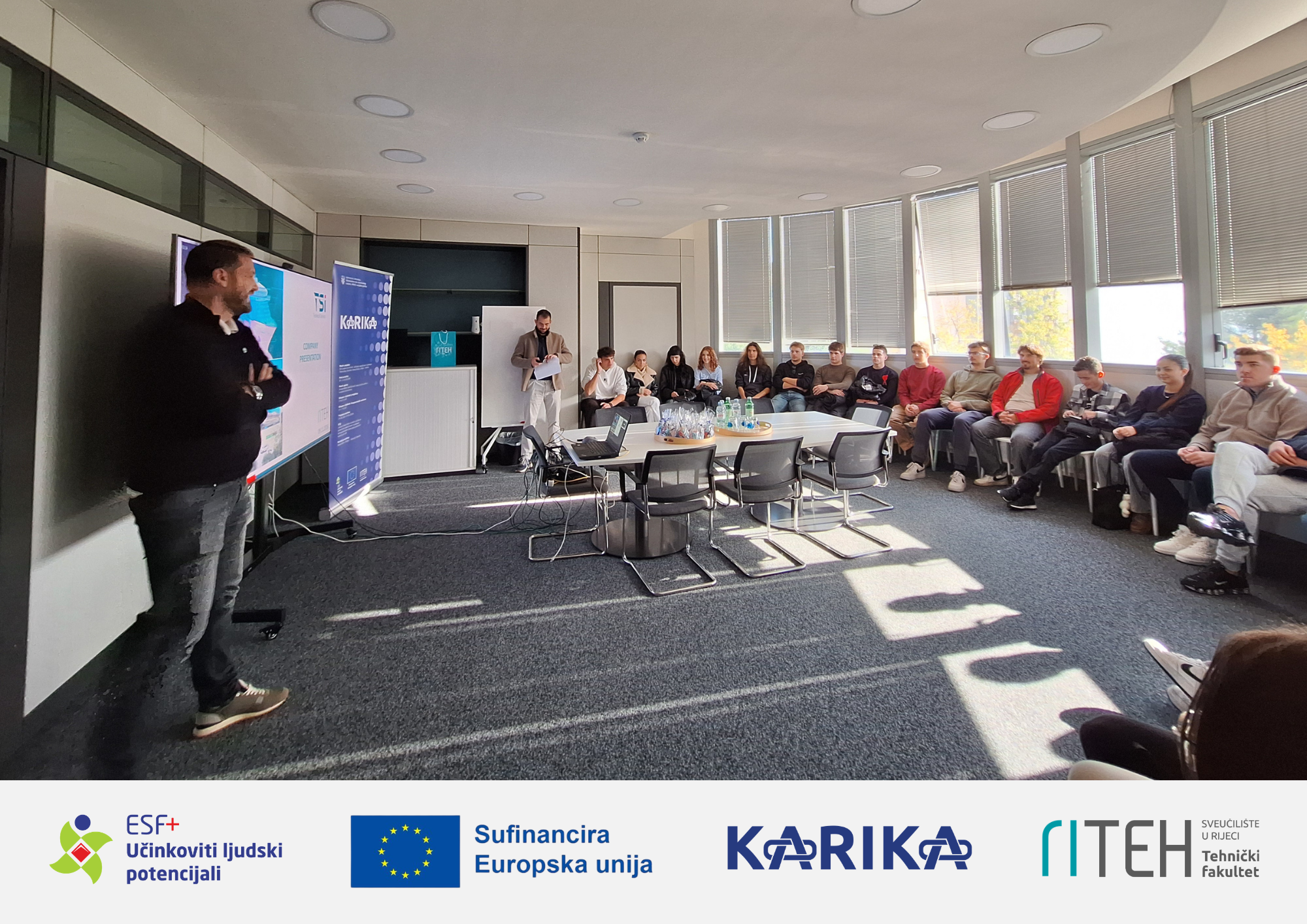
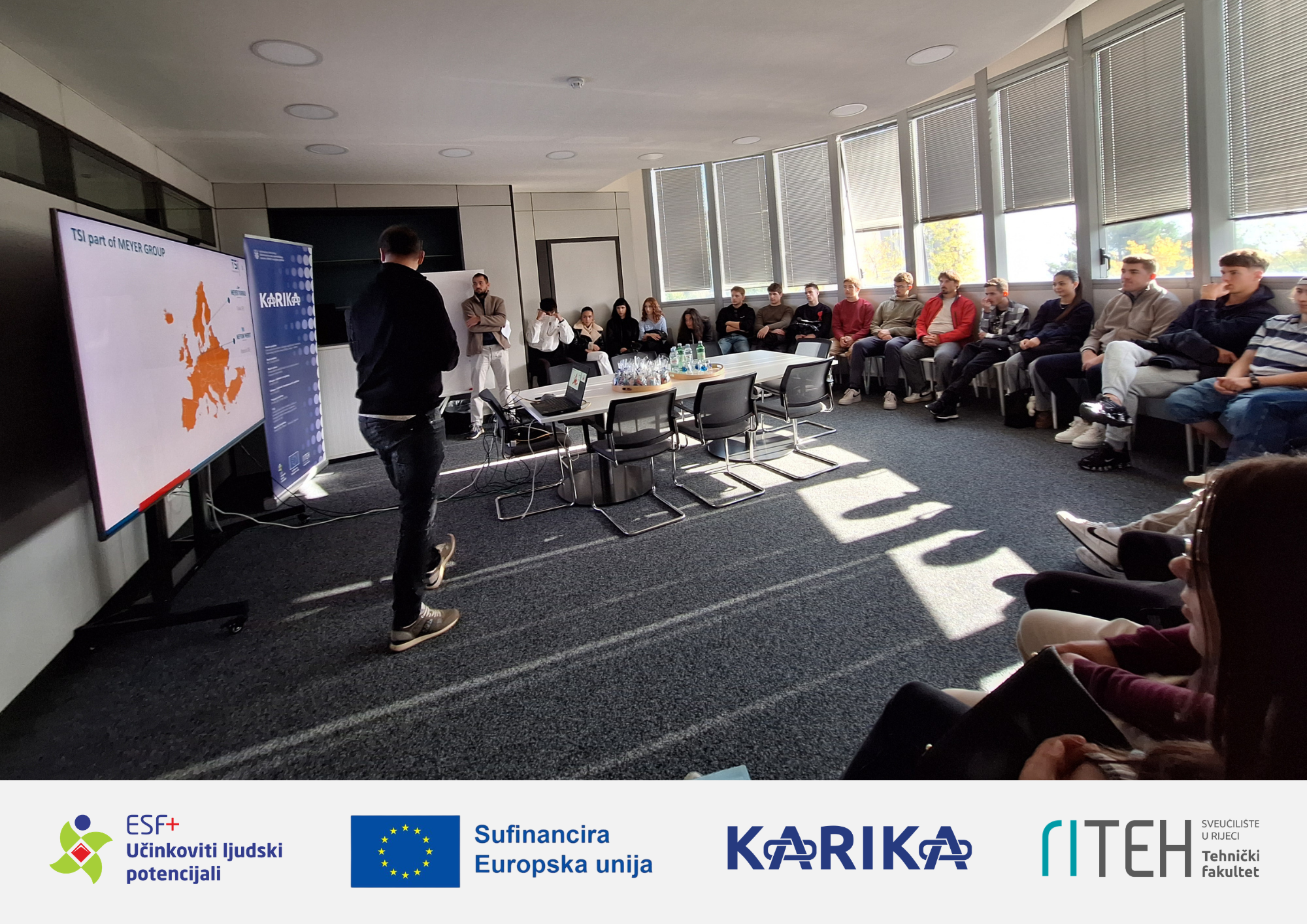
On November 9, 2026, first-year students from the undergraduate university and professional study programmes in Naval Architecture visited TSI d.o.o. in Rijeka, an industry partner base of the Faculty of Engineering. As part of their field trip, the students had the opportunity to learn about the company’s activities and operations.
The field trip was organised and led by Prof. Tin Matulja, and Prof. Marko Hadjina, while the company and its activities were presented by Krešimir Benčić, MEng. He also shared insights into his own career path – from his early university days to his current position at the company.
During the visit, the Faculty of Engineering’s new project – KARIKA – was also presented. Faculty representatives introduced the hosts to the project’s goals and planned activities, outlining ways for TSI d.o.o. to get involved and exploring potential forms of future collaboration. In doing so, the field trip also served as an opportunity to connect the Faculty’s educational and scientific-research activities with industry needs.
Such visits help students better understand how the theoretical knowledge gained during their studies applies in industry practice, while boosting their motivation. At the same time, strengthening cooperation with industry and companies like TSI opens up new opportunities for students to meet potential future employers, gain valuable insights, and receive professional guidance, as well as foster new partnerships through joint projects and initiatives.
This visit might just be the first step towards a future career in naval architecture for one of our students!
We would like to thank TSI d.o.o. and Mr. Krešimir Benčić for their hospitality, for introducing the company and the time dedicated to our students, as well as for the opportunity to present the KARIKA project and discuss future collaboration.
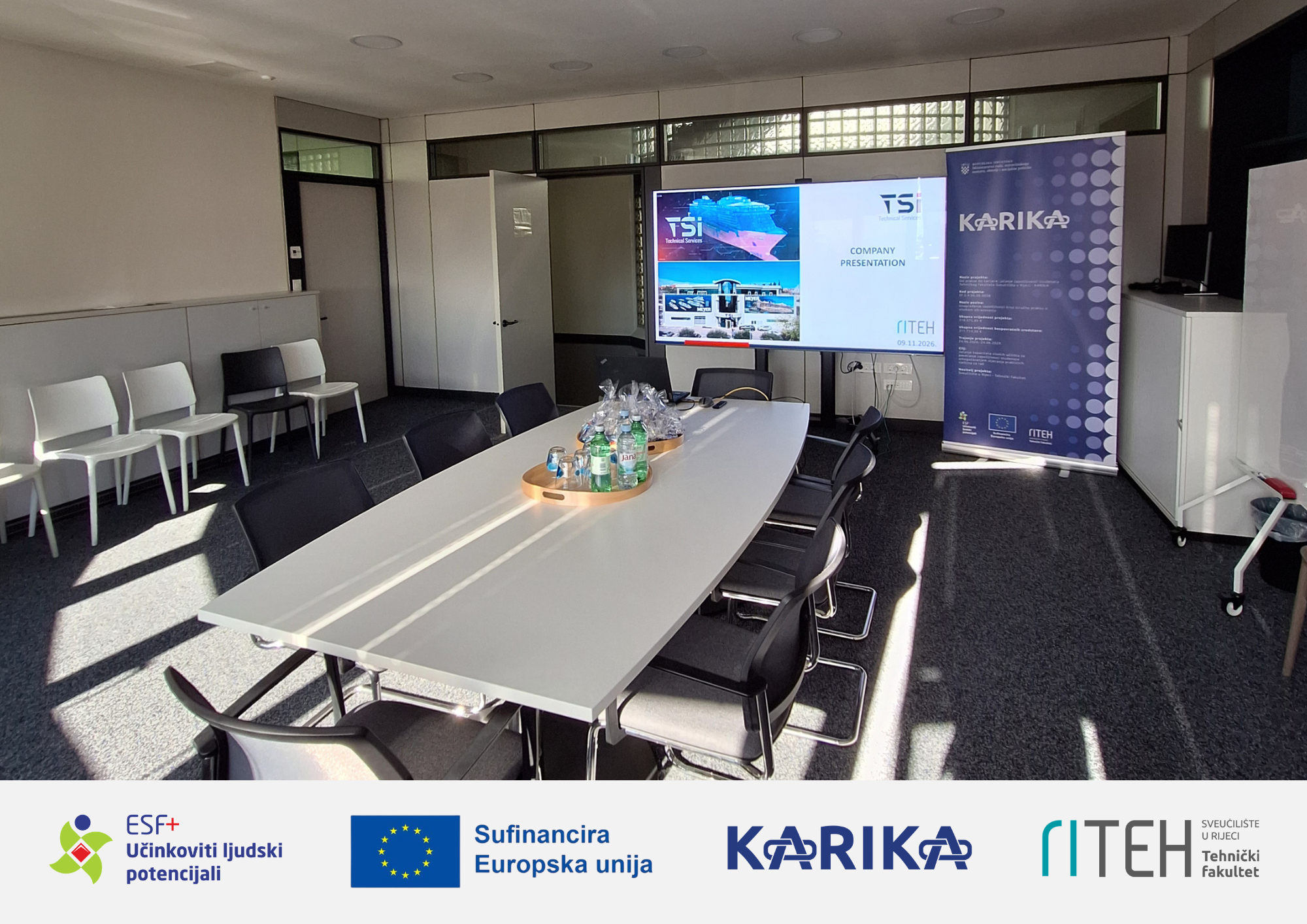
The field trip was organised as part of the project “From Internship to Career: Enhancing the Employability of Students at the Faculty of Engineering, University of Rijeka – KARIKA”, funded by the European Social Fund Plus (ESF+).